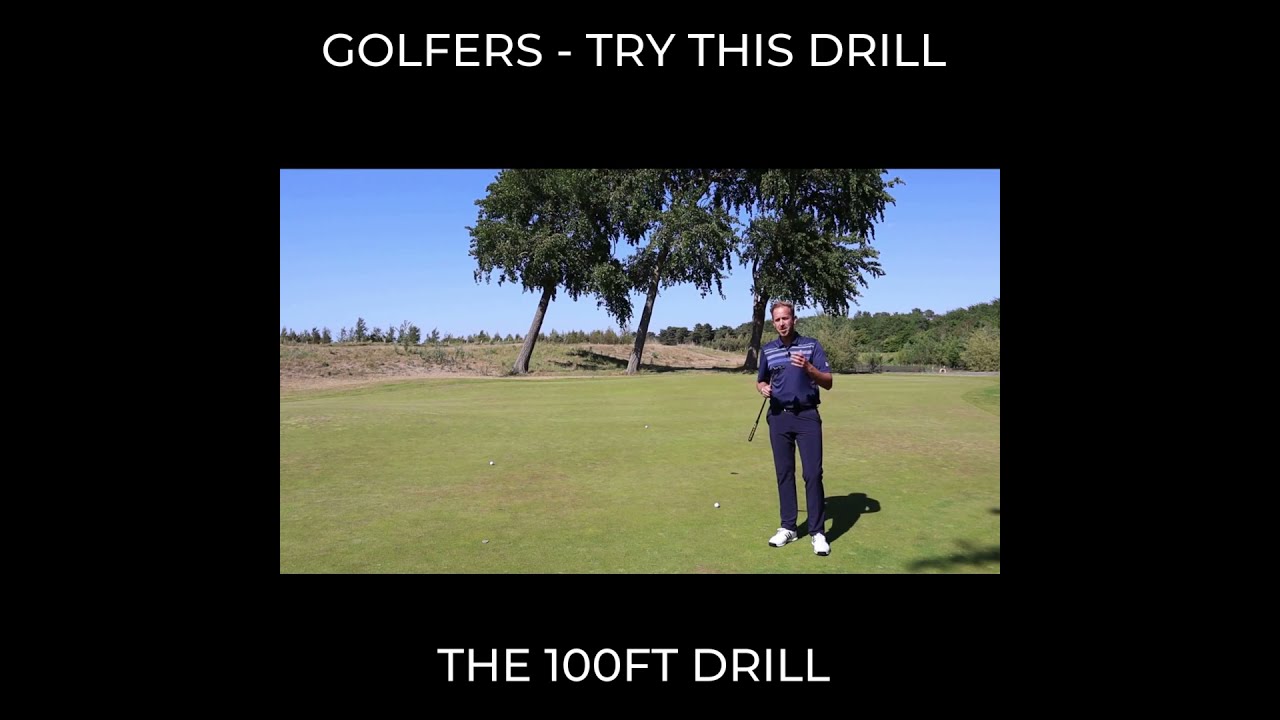
Benchmark test

The 100ft Putting Drill

Benchmark your putting with the drill used by the best players in the world.

  • 20 putts
  • Five rounds
  • Max score 250 ft
  • Tour winner benchmark 100ft
Start drill
01How to

How to take the drill

The structure is simple, and you need nothing but four balls, a practice green and your phone. You’ll hit 20 putts in total — five from 5 feet, five from 10, five from 15 and five from 20 — played across five rounds.

One round is four putts: a 5-footer, a 10-footer, a 15-footer and a 20-footer. Give each putt full attention, with the same intensity as a competitive round — read it properly and go through your full pre-shot routine. Then move to a different hole for the next round.

Five rounds of four putts
Hole a 5 ft putt and score 5 points · 10ft 10 points · 15ft 15 points · 20ft 20 points

Round 15ft10ft15ft20ft
Round 25ft10ft15ft20ft
Round 35ft10ft15ft20ft
Round 45ft10ft15ft20ft
Round 55ft10ft15ft20ft
Maximum score250ft

02Keep score

Use the free 100ft drill web app

The 100ft web app is designed with elite players in mind — a simple way to track your score during the drill, with live scoring of both Strokes Gained and feet holed so you can see progress as it happens.

The 100ft test has Strokes Gained baked right in — as you log each putt made or missed, the score is updated live. Your practice and your rounds finally speak the same language. If you tag a miss, select which side the putt missed to pick up on miss tendencies.

Open the web app

Try the live demo — select a mode and press Start Drill.

03Tag your misses

100ft drill report

Once you have finished the drill you can download a PDF report. Three key data points are measured. Strokes gained score, feet holed and miss tendency.

That is the whole idea behind the Line Speed Read system: collect your Strokes Gained score everywhere you putt, on the course and in training, and let the numbers show you exactly how you are performing. The 100ft drill is a great replication of a round of golf — practising under pressure helps you perform when it matters most.

Drill 100ft drill report04 Aug · 20 putts 01 / 06
−1.50Strokes gained
35/250Feet holed
6Holed
2Left
11Right

Every putt · one row is one pass

5 ft10 ft15 ft20 ft
01✓02R03R04— 05✓06R07L08R 09✓10✓11R12R 13✓14R15R16L 17✓18R19R20R
✓ = holedL / R = missed that side
line-speed-read.comPowered by AI Caddie
The benchmarks

What’s a good score?

The targets are clear, built from two decades benchmarking the best putters in the world. Here’s where your total footage places you:

Most golfers are surprised by their first score — in both directions. The 5-footers that felt automatic get harder when there’s a running total to protect, and the odd 20-footer drops in a way that feels genuinely earned. That’s the drill doing its job.

Footage HoledLevel
145 ftThe all-time best — Henrik Stenson
100 ftPGA Tour winner level
70–99 ftScratch golfer — fundamentals sound
45–69 ftClub golfer — clear room to improve
Below 45 ftPutting is costing you shots

Line · Speed · Read

One hundred feet. That’s the goal.

Three skills, tested together, on every putt.

Take the 100ft drill

Watch the drill

The 100ft putting drill

FAQ

100ft drill questions

What is the 100ft putting drill?

It’s a putting benchmark test used on tour. You hit 20 putts — from 5, 10, 15 and 20 feet, across five different holes — and add up the total footage of every putt you hole. That total is your score, a single honest measure of your putting.

What is a good 100ft drill score?

Holing 100 feet is PGA Tour winner level. 70 to 99 feet is scratch standard, 45 to 69 feet is a solid club golfer, and below 45 feet means putting is costing you shots. The all-time best recorded is 145 feet, by Henrik Stenson.

Why does the 20ft putt count more than the 5ft?

The score is distance-weighted because of the strokes gained scoring and the tour expected putts.

DistanceTour expectedMake rate
5 ft1.2476%
10 ft1.6139%
15 ft1.7822%
20 ft1.8713%
How do I use it to test a new putter?

Run five rounds with your current putter and record the score, then five rounds with the new one under the same conditions and compare the footage. If the new putter genuinely helps your line or pace, the number improves — regardless of how it feels in your hands.