Menu
Book a Putter Fitting
An alternative way of seeing the break. Start where the ball drops in and work back to the ball.
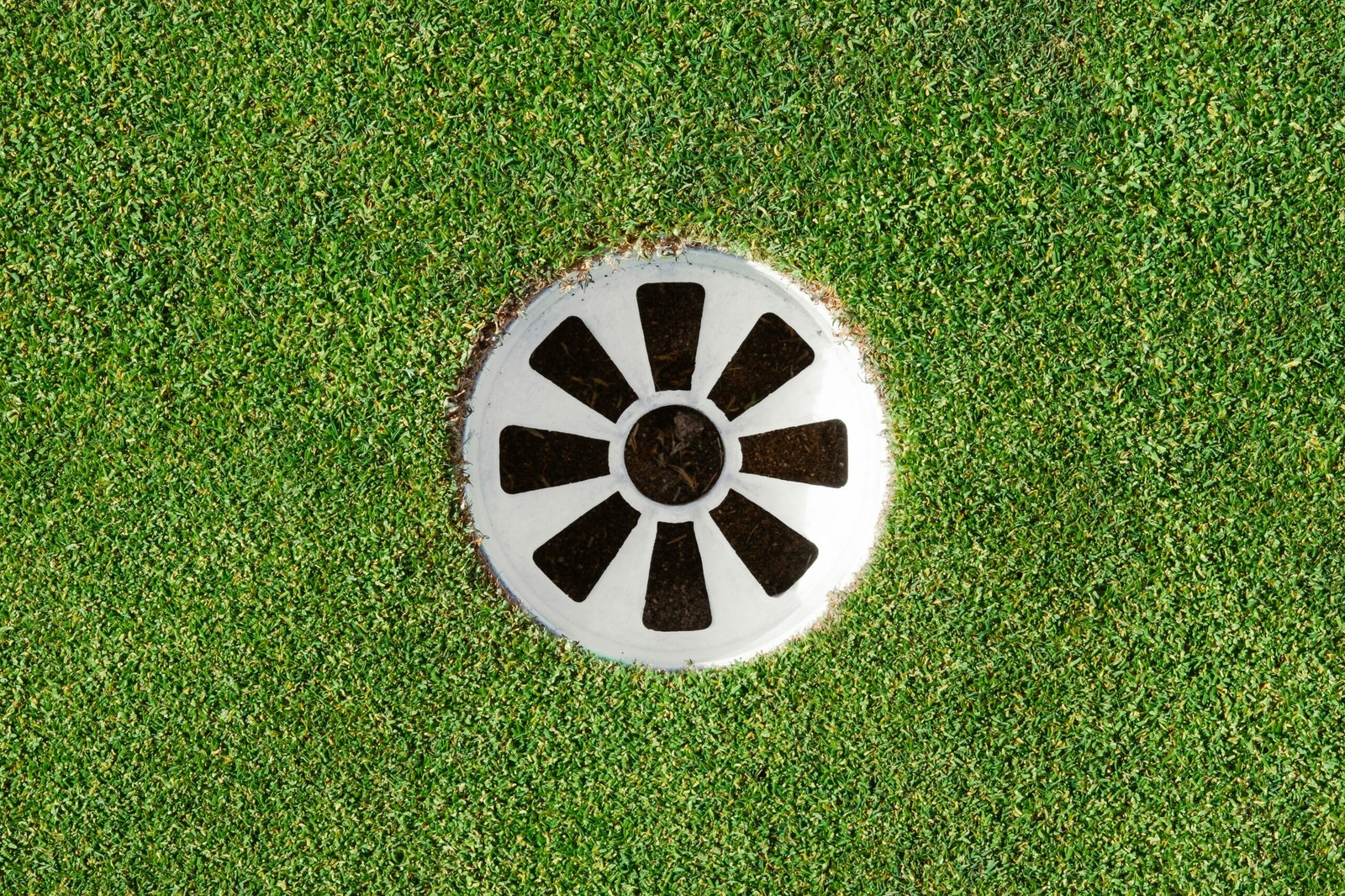
Picture a clock lying over the hole, with 6 o'clock — minute 30 — pointing straight back down your line. Every minute round from there is six degrees.
To visualise the entry, we use the clock rather than degrees.
The cup is 4.25 inches and the ball is 1.68, so the ball's centre can pass a little either side of the middle and still drop. The LSR three minute entry range is purely designed to help you visualise the break, working from the hole back to the ball.
The window never changes width. It changes position.
Same putt, same green. The only difference is how far past the hole the ball would have finished.
On a 6 ft putt at 2%, dying it needs 10.0 inches of read and enters at minute 27. Two feet past needs 4.7 inches and enters at minute 29. Same putt. So a read without a pace attached is half a read.
Entry angle is displayed next to your read in the AI Caddie, and in all the drills and the strokes gained calculator.
How far you lean on the high side is a choice. The same putt, a 12 footer on 2% rolled a foot past, looks like this on each.
High bias is the default. It leaves the read alone and leans the picture high, so nothing you aim at sits below the middle of the cup. ±1 centres the mark on the entry with a minute either side — the neutral read. High limit is the highest line you can take at the pace you have selected and still make it — the ball entering right on the top edge of the cup. The toggle names the pace it is working to, so it reads high limit die, 1ft or 2ft as you change it. On this putt, a foot past, the entry swings from minute 26 round to minute 20. There is nothing above it — any more break and the ball is past the edge.
The limit moves with the pace, because the cup does. Dying, the ball can still drop with a quarter of it hanging over the far lip; running two feet by, it needs to be nearer the middle or it rides over the edge. So high limit die sits a long way round the face and high limit 2ft is close to straight — each one is the most you can take at that speed and still have it go in.
One thing to be clear about. The window is a visual aid, designed to help see the break from the hole back to the start point. Some players really benefit from seeing the entry angle. Putts can and will go in from outside of the three minute zone.
The numbers behind it come from a model of a rolling ball on a uniform slope — real greens have grain, wear and footmarks.
A clock laid over the hole with 6 o'clock pointing back down your line. Minute 30 is a dead straight entry and each minute is six degrees. Every breaking putt enters before it.
Yes. The three minute window is designed to help visualisation and focus, and some players really benefit from seeing the entry angle. Putts can and will go in from outside of the three minute zone.
It sets both the break and the angle. On a 6 ft putt at 2%, dying it needs 10.0 inches of read and enters at minute 27; two feet past needs 4.7 inches and enters at minute 29. Same putt, different window position.
My blog